13 best AI customer service agents
Empower your support team and scale resolutions with the industry’s top AI agents for customer service.



Candace Marshall
Vice President, Product Marketing, AI and Automation
Dernière mise à jour March 24, 2026
A guide to the top 13 AI agents
Customer expectations have evolved. The rhythm of our daily lives has been reshaped by technology, raising our standards for good customer service. Advances in generative AI have a lot to do with it—instant, personalized, and proactive service is no longer the exception, it’s the standard.
To meet these rising expectations, modern support teams are investing in AI agents. But these aren’t the rigid, script-based chatbots of the past. Unlike traditional chatbots, AI agents can reason, adapt, and resolve complex issues autonomously, delivering high-quality support at scale.
This is your definitive guide to the 13 best AI customer service agents available today. Keep reading to learn what makes an AI agent different, which are the top AI agents for customer service, and how to choose the right solution to improve efficiency, reduce costs, and stay competitive.
More in this guide:
- What are AI agents for customer service?
- The benefits of AI agents for customer service
- Chart comparing AI agents for customer service
- Best AI agents for customer service
- How to choose the right AI agent for your customer service
- Main challenges when implementing AI agents for customer service
What are AI agents for customer service?
An evolution from traditional customer service chatbots, AI agents are intelligent bots designed to understand and autonomously resolve customer issues via any channel. Powered by agentic AI, they can reason, adapt, and act independently. They effectively detect a customer's intent and provide the right resolution.
Unlike traditional bots, AI agents interact with customers in dynamic, human-like conversations, guiding them all the way to a solution, with or without human assistance.
The best AI customer service agents feature the following core capabilities:
- End-to-end resolution without rigid scripts.
- System-level actions like processing refunds or updating customer data.
- Intent understanding for more human, personalized responses.
- Omnichannel support across digital and voice channels.
- Multilingual coverage to support global customers at scale.
The benefits of AI agents for customer service
AI agents are the fastest path for enterprise and mid-market teams to improve customer experience while controlling costs. The benefits of AI agents for customer service are many, and with Zendesk AI agents, you get these benefits as part of Zendesk’s Resolution Platform. This means agents work across your full support stack (tickets, copilot, knowledge base, QA, and analytics) to drive real resolutions end to end.
The benefits of AI agents for customer service include:
- Cost reduction and efficiency, as automating interactions reduce operational costs and free up human agents for high-value work.
- Improved CSAT and CX, as you can deliver 24/7, instant, personalized support to meet customers’ expectations.
- Scalability without linear headcount growth, as you can handle rising ticket volume smoothly.
- Complex requests resolution without scripts, as agentic AI is able to orchestrate steps across systems and adapt in real time.
- Continuously improved quality, as built-in QA, transparent reasoning, and step-level tuning help you see what’s working, fix what isn’t, and keep accuracy and reliability high.
- Increased ROI with AI-powered insights that surface new automation opportunities like trending issues, new regions, and new teams.
The best AI customer service agents platforms should be able to provide most of these benefits. Make sure to check which benefits the platform you choose is able to provide.
Chart comparing AI agents for customer service
|
Software |
Best for |
Starting price |
Free trial |
|
Best for sophisticated automated resolutions across all channels |
As low as $1.50 per resolution |
14 days | |
|
Best for predictive ticket routing and routine query resolution |
$29 per agent/month (billed annually) |
14 days | |
|
Best for contextual, conversational chat automation |
$0.99 per resolution (billed annually) |
14 days | |
|
Best for IT service workflows and enterprise automation |
Contact ServiceNow |
Contact ServiceNow | |
|
Best for CRM automation and personalized customer engagement |
$2 per conversation |
30 days | |
|
Best for integrated omnichannel support |
$50 per user/month (billed annually) |
30 days | |
|
Best for conversational commerce and messaging strategies |
Contact LivePerson |
14 days | |
|
Best for handling high-volume queries autonomously |
Contact Ada |
14 days | |
|
Best for complex support ecosystems |
Free (SMS/MMS only) |
30 days | |
|
Best for contact center orchestration |
$75 per user/month (billed annually) |
60 days | |
|
Best for advanced performance analytics |
Contact Boost.ai |
14 days | |
|
Best for multilingual chat automation |
Contact Cognigy.ai |
Unavailable | |
|
Best for fast chatbot setup |
$24.17/mo (billed annually) for 100 billable conversations |
7 days |
Best AI agents for customer service
- Zendesk AI: Best for sophisticated automated resolutions across all channels
- Freshdesk Freddy AI (Freshworks): Best for predictive ticket routing and routine query resolution
- Intercom Fin: Best for contextual, conversational chat automation
- ServiceNow Virtual Agent: Best for IT service workflows and enterprise automation
- Salesforce Agentforce: Best for CRM automation and personalized customer engagement
- Microsoft Dynamics 365: Best for integrated omnichannel support
- LivePerson Conversational Cloud: Best for conversational commerce and messaging strategies
- Ada AI: Best for handling high-volume queries autonomously
- IBM watsonx Assistant: Best for complex support ecosystems
- Genesys: Best for contact center orchestration
- Boost.ai: Best for advanced performance analytics
- Cognigy.ai: Best for multilingual chat automation
- Tidio: Best for fast chatbot setup
1. Zendesk AI
Best for sophisticated automated resolutions across all channels
Source: Zendesk AI
|
Starting price |
Free trial |
Key features |
|
As low as $1.50 per resolution |
14 days |
|
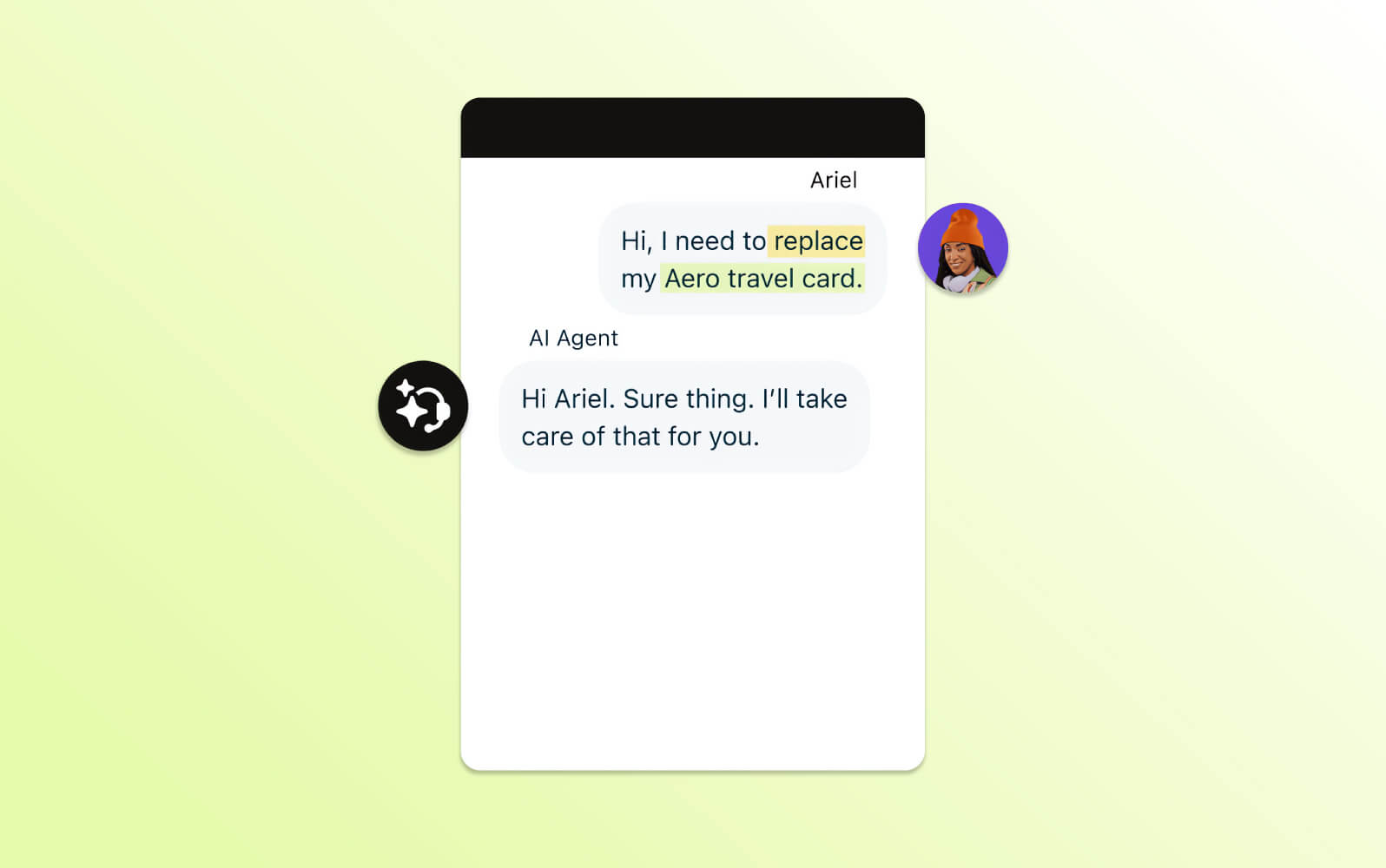
Zendesk AI stands out as a service-ready tool designed specifically to handle the complexities of modern customer service. Unlike generic bots, Zendesk's solution is pre-trained on billions of real service interactions—AI agents understand customer intent immediately, rather than requiring months of manual training.
With real-world information at the core of the tool, Zendesk can offer a true human-first service across all channels (web, mobile, social, voice, and email). Plus, as Zendesk's AI agents are experts in customer service from the outset, they don't require coding or engineering help to provide accurate support.
Additionally, Zendesk is engineered with a resolution-first approach. It automates complex service processes, such as routing and classification, to ensure faster response times and prioritize the successful closing of tickets. Seamless handoff to agents is another plus, making AI and human flows the perfect combo for an exceptional customer experience.
Other features include RAG-powered answers from the help center and knowledge base, built-in QA for AI agents and analytics, transparent AI decisioning, as well as data security and compliance.
|
Pros |
Cons |
|
|
What people are saying:
Learn more: Explore more Zendesk pricing plans and experience the Zendesk AI effect with an interactive AI agent demo.
2. Freshdesk Freddy AI
Best for predictive ticket routing and routine query resolution
Source: Freshdesk Freddy AI
|
Starting price |
Free trial |
Key features |
|
$29 per agent/month (billed annually) |
14 days |
|
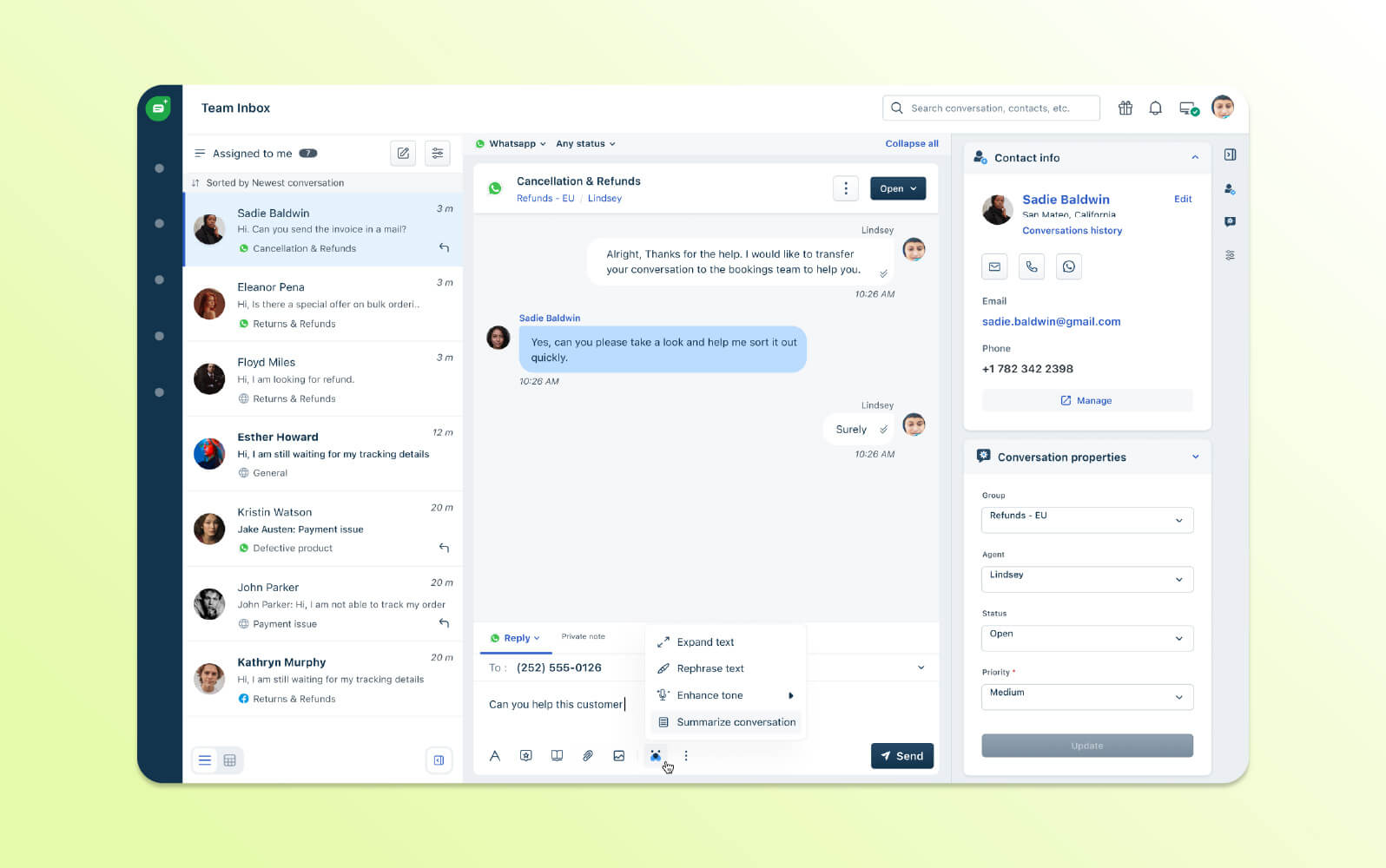
Freshdesk Freddy AI focuses on enhancing operational productivity through predictive ticket routing, workflow automation, and the resolution of routine queries. Designed with a functional and practical approach, it automates backend actions and streamlines service desk operations across various departments. The platform leverages historical data and agent expertise to ensure tickets are handled by the most qualified personnel.
Freshdesk Freddy AI's capabilities include omnichannel support across email, chat, and phone, as well as AI-powered self-service. There’s also an integrated knowledge base that provides automated answers and offers agents suggested responses. Additionally, the platform includes reporting and analytics, helping agents monitor bot performance and identify emerging customer service trends.
|
Pros |
Cons |
|
|
What people are saying:
Learn more: Discover how Zendesk vs. Freshdesk compare.
3. Intercom Fin
Best for contextual, conversational chat automation
Source: Intercom Fin
|
Starting price |
Free trial |
Key features |
|
$0.99 per resolution (billed annually) |
14 days |
|
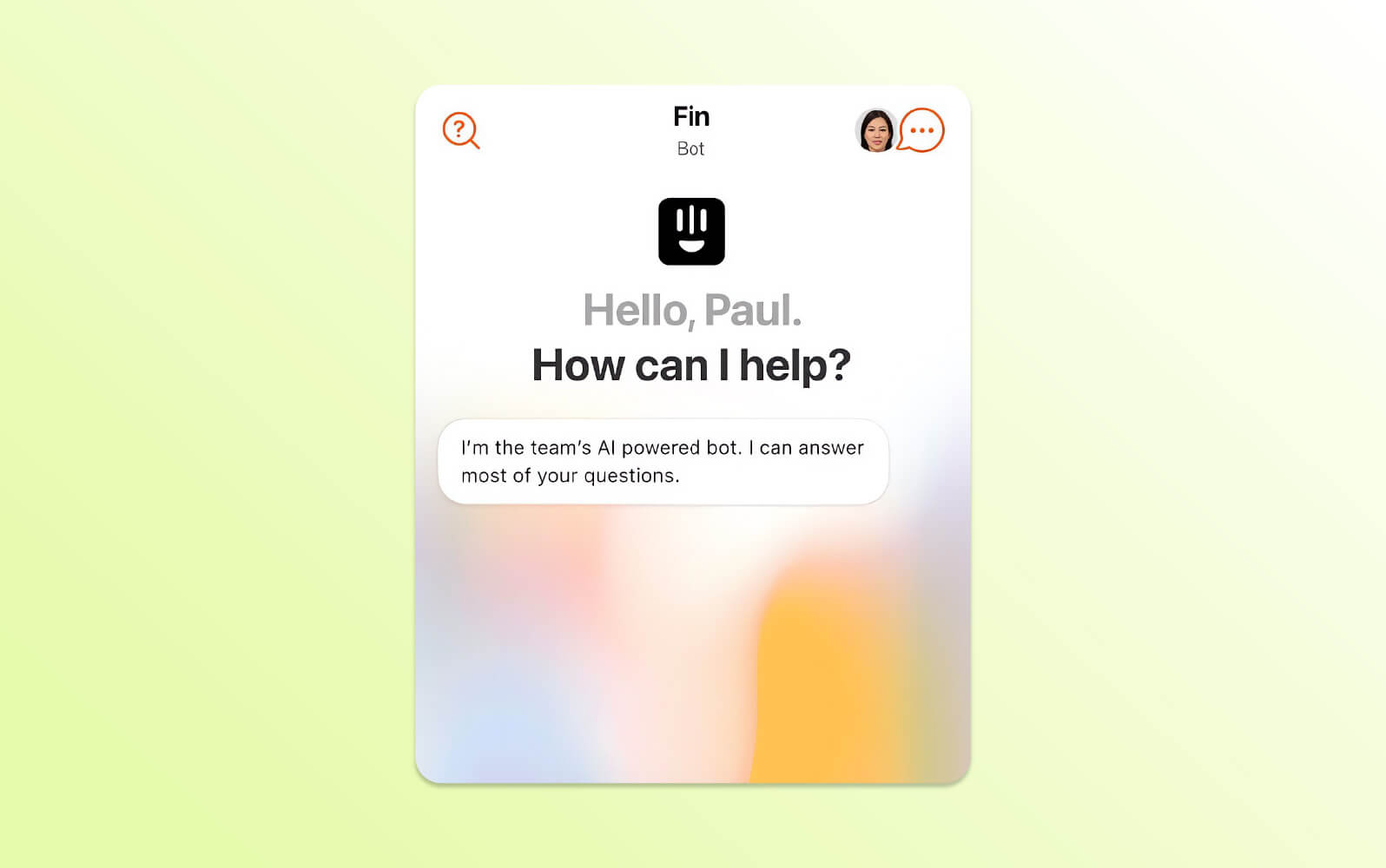
Intercom Fin is a generative AI chatbot engineered specifically for customer self-service through conversational, knowledge-based answers. Optimized for chat-first environments, Fin delivers fast responses to common queries by instantly pulling content from help centers, PDFs, and public webpages.
While Fin excels at deflecting routine FAQs, its performance is highly dependent on the quality and organization of the underlying support content. Still, the tool acknowledges when it can’t find an answer and offers to connect the customer with a human agent. During escalation, the conversation context is passed to a live agent, supporting continuity when issues require human involvement.
|
Pros |
Cons |
|
|
What people are saying:
Learn more: Discover how Intercom integrates with Zendesk and/or how Zendesk vs. Intercom compare.
4. ServiceNow Virtual Agent
Best for IT service workflows and enterprise automation
Source: ServiceNow Virtual Agent
|
Starting price |
Free trial |
Key features |
|
Contact ServiceNow |
Contact ServiceNow |
|
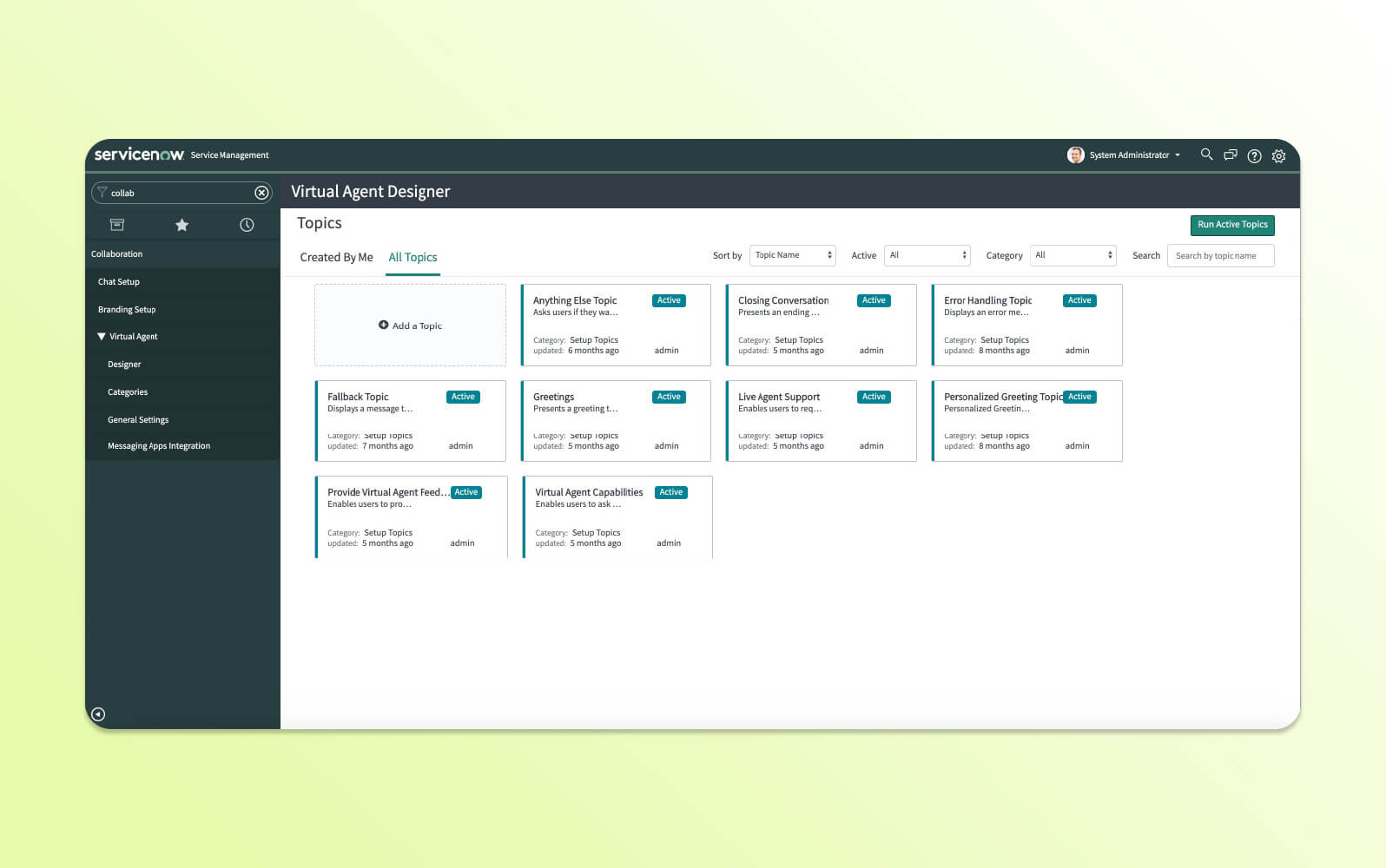
ServiceNow Virtual Agent is an enterprise-grade AI solution designed primarily to streamline IT service management (ITSM) and internal employee support workflows. The solution focuses on automating complex internal requests, such as password resets and hardware procurement, by connecting them directly to existing departmental data and backend systems.
With ServiceNow, large organizations deflect common internal tickets and resolve technical issues through conversational interfaces like Microsoft Teams or Slack. Additionally, due to its highly customizable and enterprise-level nature, ServiceNow generally requires a significant technical investment, involving a much more complex setup. Implementation often demands dedicated developer resources to build and maintain the sophisticated logic required.
|
Pros |
Cons |
|
|
What people are saying:
Learn more: Discover how Zendesk vs. ServiceNow compare.
5. Salesforce Agentforce
Best for CRM automation and personalized customer engagement
Source: Salesforce Agentforce
|
Starting price |
Free trial |
Key features |
|
$2.00 per conversation |
30 days |
|
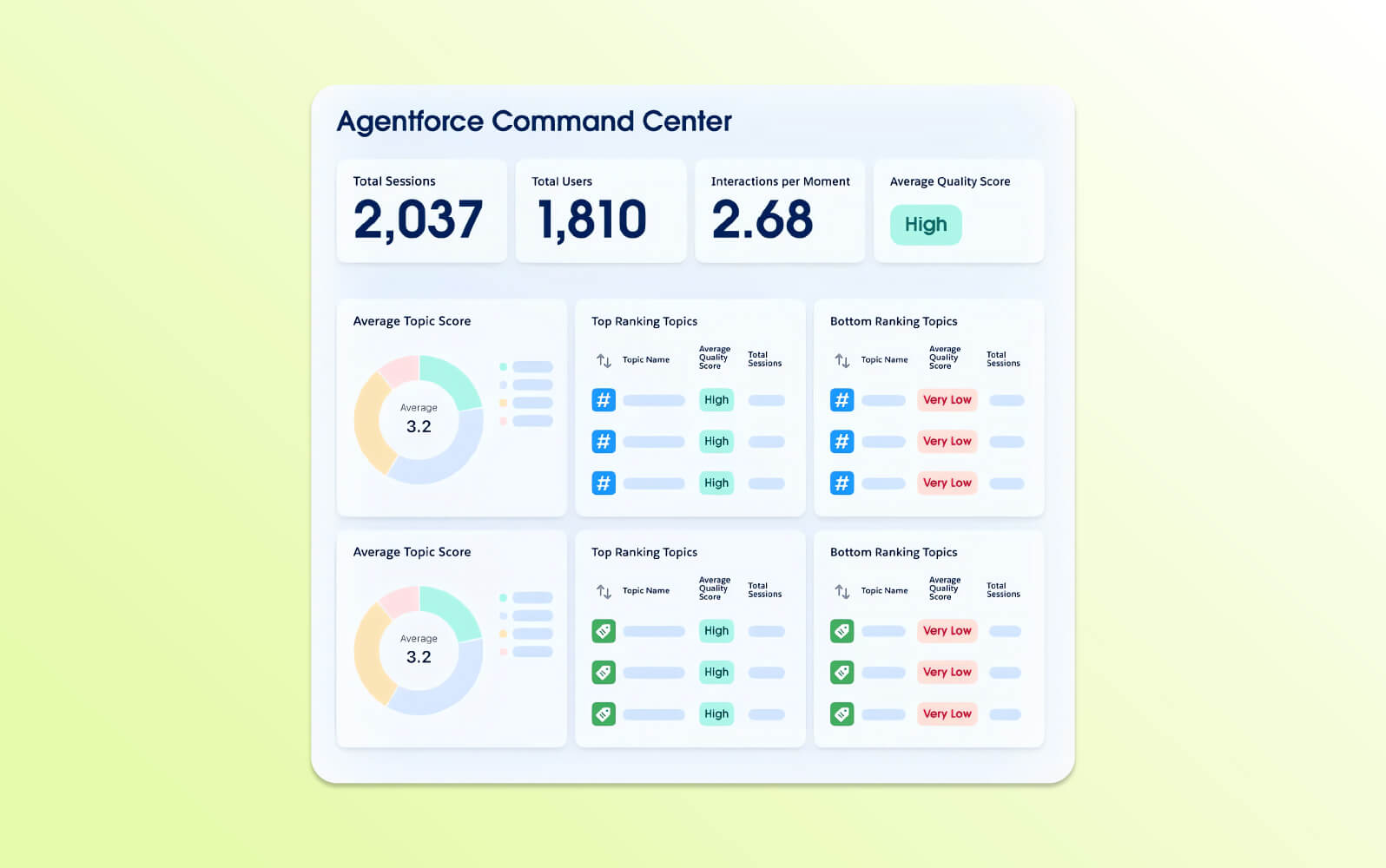
Salesforce Agentforce is an autonomous AI platform integrated into the Salesforce CRM, designed to drive productivity across sales, service, and marketing workflows. AI agents perform multi-step tasks, such as qualifying leads, scheduling meetings, and processing returns. The generative AI responses are grounded in real-time data from the Salesforce Data Cloud, including purchase history and past interactions.
The platform includes specialized, pre-built agents for lead nurturing and role-playing negotiations, and a low-code agent builder that allows teams to customize workflows. While 24/7 proactive support and handoffs to human agents is achievable, their success is dependent on the data hygiene of the CRM.
|
Pros |
Cons |
|
|
What people are saying:
Learn more: Discover how Salesforce integrates with Zendesk and how Zendesk vs. Salesforce compare.
6. Microsoft Dynamics 365 Customer Service
Best for integrated omnichannel support
|
Starting price |
Free trial |
Key features |
|
$50 per user/month (billed annually) |
30 days |
|
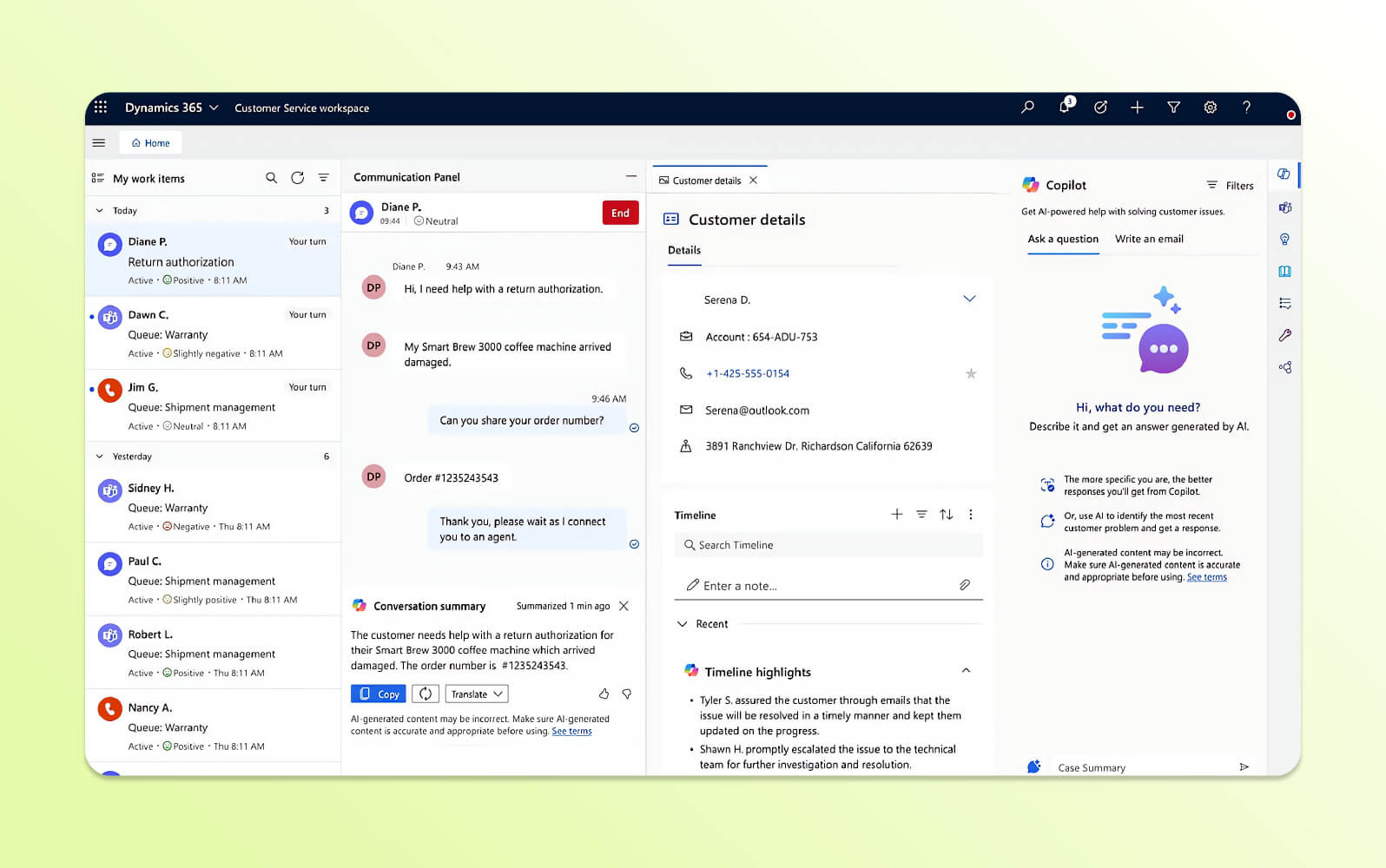
Microsoft Dynamics 365 Customer Service works well for organizations committed to the Microsoft ecosystem. With a unified CRM foundation, it enables teams to manage customer interactions across all digital channels (email, chat, and social), while maintaining a complete 360-degree view of the customer journey. It seamlessly connects with familiar tools like Microsoft Teams and Outlook, ensuring that service workflows remain consistent across the entire organization.
Rather than focusing on isolated bot resolutions, Dynamics 365 emphasizes ecosystem-based automation and real-time agent assistance through Microsoft Copilot. While it supports CRM-driven workflows such as case summarization and response drafting, the platform has a complex setup and administration model, along with a complicated licensing structure. It is generally better suited to large enterprises already embedded in the Microsoft ecosystem than teams seeking a simpler service-resolution tool.
|
Pros |
Cons |
|
|
What people are saying:
Learn more: Discover how Zendesk vs. Microsoft Dynamics 365 compare.
7. LivePerson Conversational Cloud
Best for conversational commerce and messaging strategies
Source: LivePerson Conversational Cloud
|
Starting price |
Free trial |
Key features |
|
Contact LivePerson |
14 days |
|
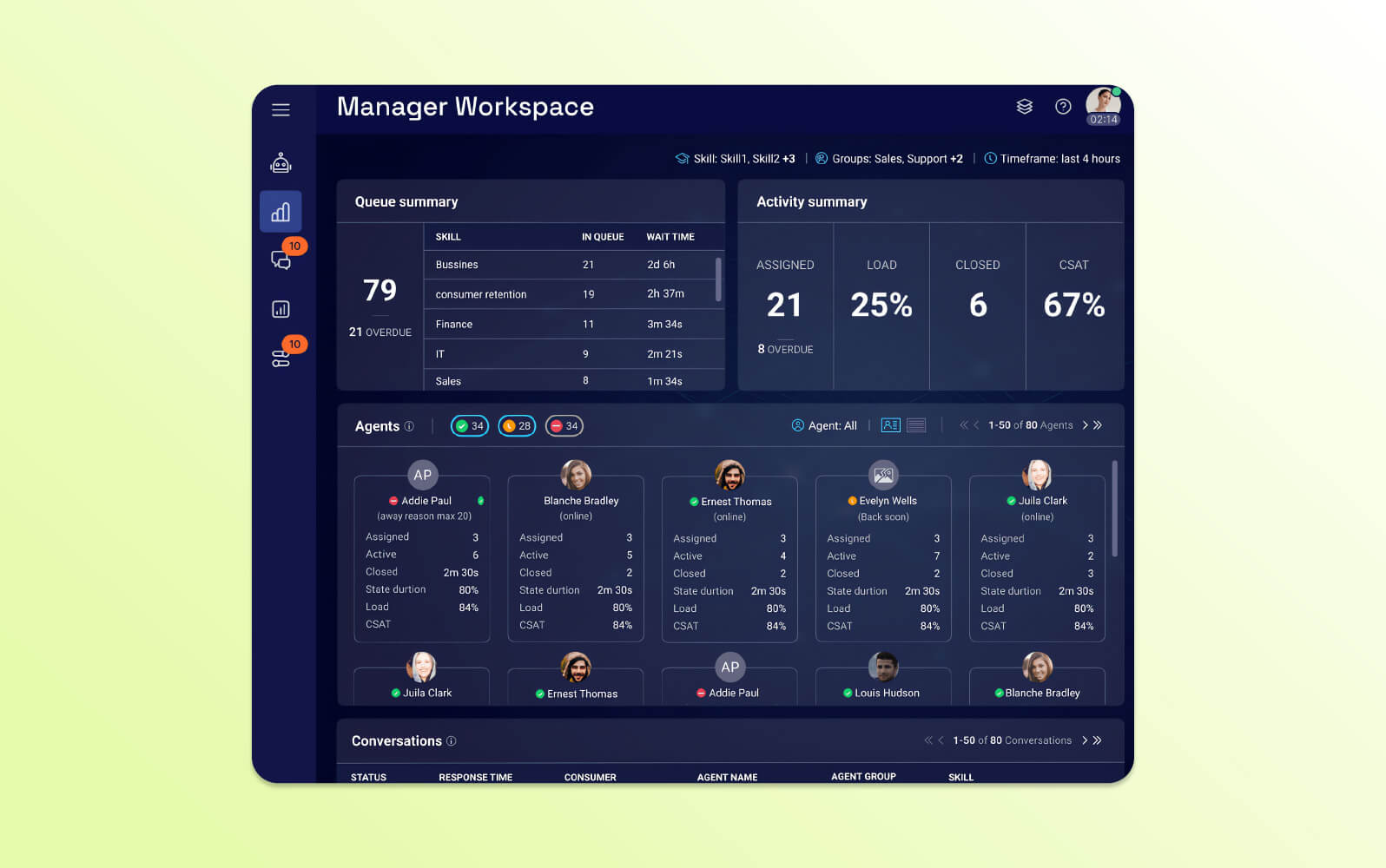
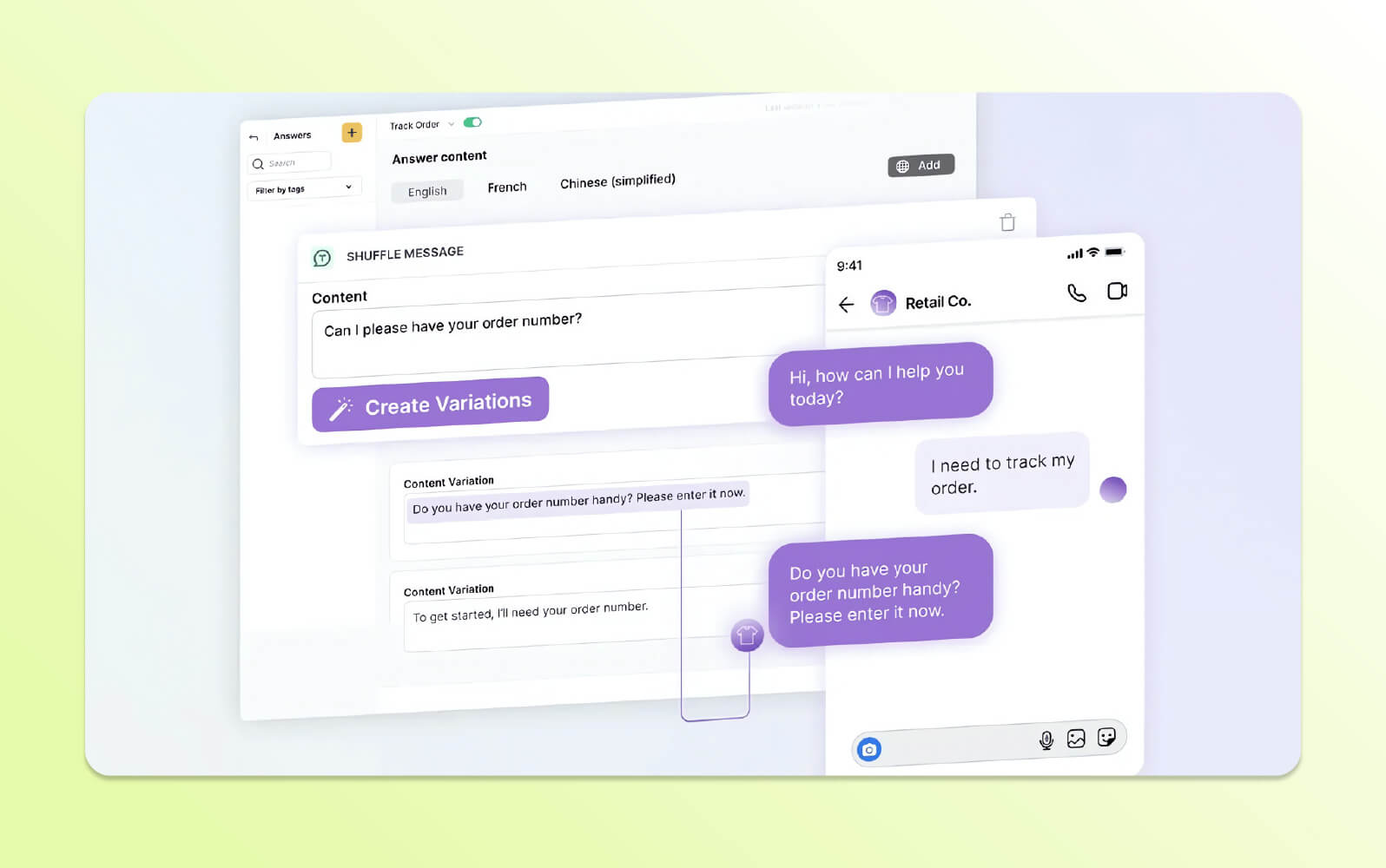
LivePerson Conversational Cloud is designed for brands that prioritize messaging-heavy environments and conversational commerce. Its core strength is its ability to manage high-volume, digital-first interactions across channels like SMS, WhatsApp, Apple Messages for Business, and Facebook Messenger. The tool's strategy balances human agents, intelligent automation, and AI to power human-like interactions across the entire consumer journey.
The intuitive low-code interface allows teams to design automated conversational flows and deploy bots that fulfill specific intents. While these tools enable significant automation, implementing these workflows at enterprise scale can be complex, often requiring technical resources or developer assistance for advanced customizations and backend integrations.
|
Pros |
Cons |
|
|
What people are saying:
Learn more: Discover how Zendesk vs. LivePerson compare.
8. Ada AI
Best for handling high-volume queries autonomously
Source: Ada AI
|
Starting price |
Free trial |
Key features |
|
Contact Ada |
14 days |
|
Ada AI is designed to help non-technical teams build and manage sophisticated self-service bots without needing to write code. Built for speed and agility, the platform uses a drag-and-drop builder that allows support leaders to quickly launch automated experiences across messaging, social, and voice channels. Ada AI focuses primarily on automating repetitive inquiries for high-volume efficiency.
The platform moves beyond traditional scripts to understand customer intent. Then, it draws accurate answers directly from an existing help center or knowledge base. While this enables customizable bot personas and always-on support, resolution quality can vary, and API access is often expensive.
|
Pros |
Cons |
|
|
What people are saying:
Learn more: Discover how Ada integrates with Zendesk.
9. IBM watsonx Assistant
Best for complex support ecosystems
Source: IBM watsonx Assistant
|
Starting price |
Free trial |
Key features |
|
Free (SMS/MMS only, 5-minute session timeout limit) |
30 days |
|
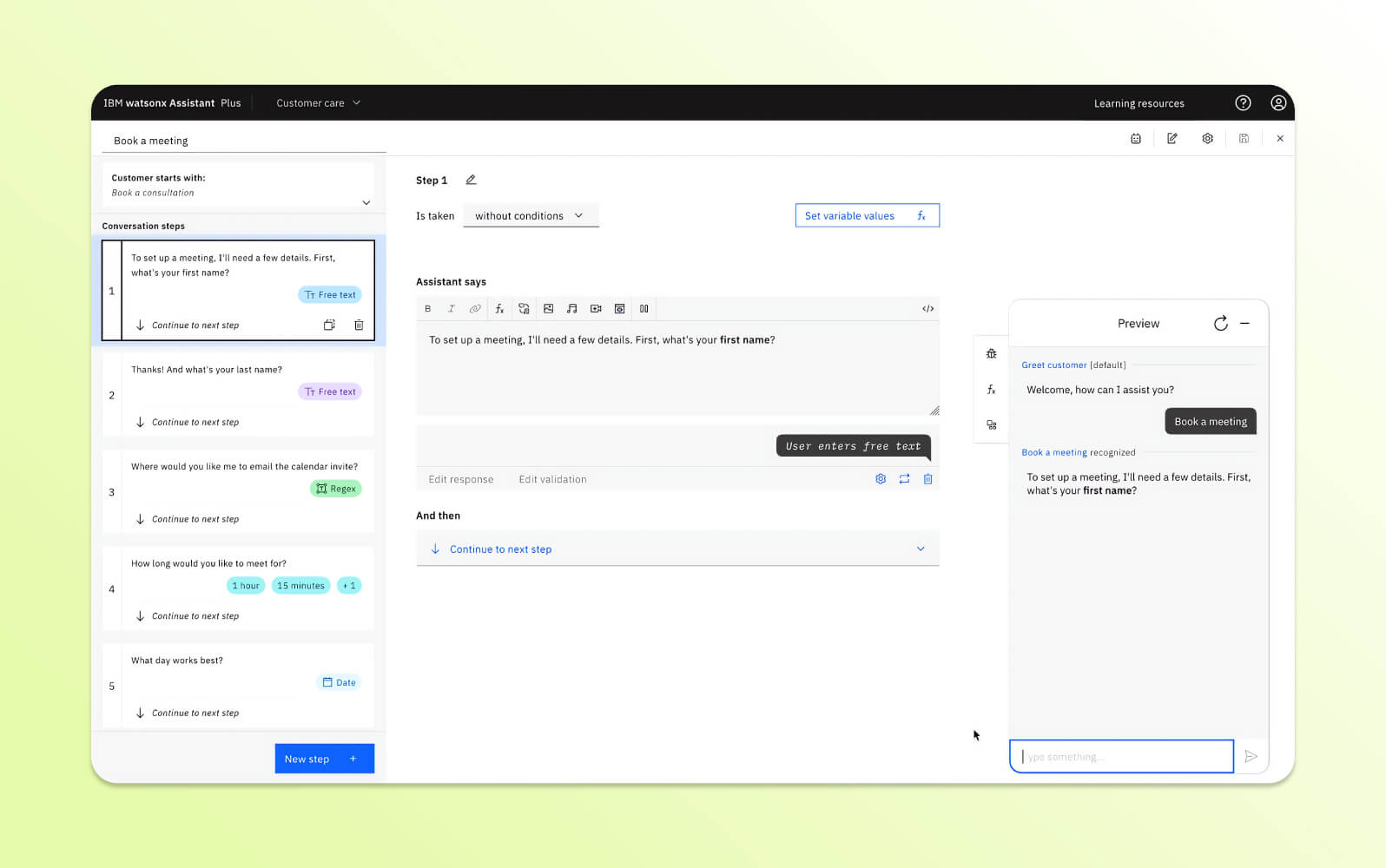
IBM watsonx Assistant is a configurable, AI-driven self-service platform built for the complex demands of large-scale enterprises. It automates sophisticated self-service actions across web, mobile, and phone systems by grounding generative AI responses in business-specific data.
The platform emphasizes enterprise-level flexibility, offering tools for task-oriented workflows and built-in proactive clarifications of customer intent. While its no-code interface supports business users, the platform’s high configurability and deep architectural control often require more technical resources and developer involvement to manage backend integrations effectively.
|
Pros |
Cons |
|
|
What people are saying:
Learn more: Discover how the IBM Watson Assistant App integrates with Zendesk.
10. Genesys
Best for contact center orchestration
Source: Genesys
|
Starting price |
Free trial |
Key features |
|
$75 per user/month (billed annually) |
60 days |
|
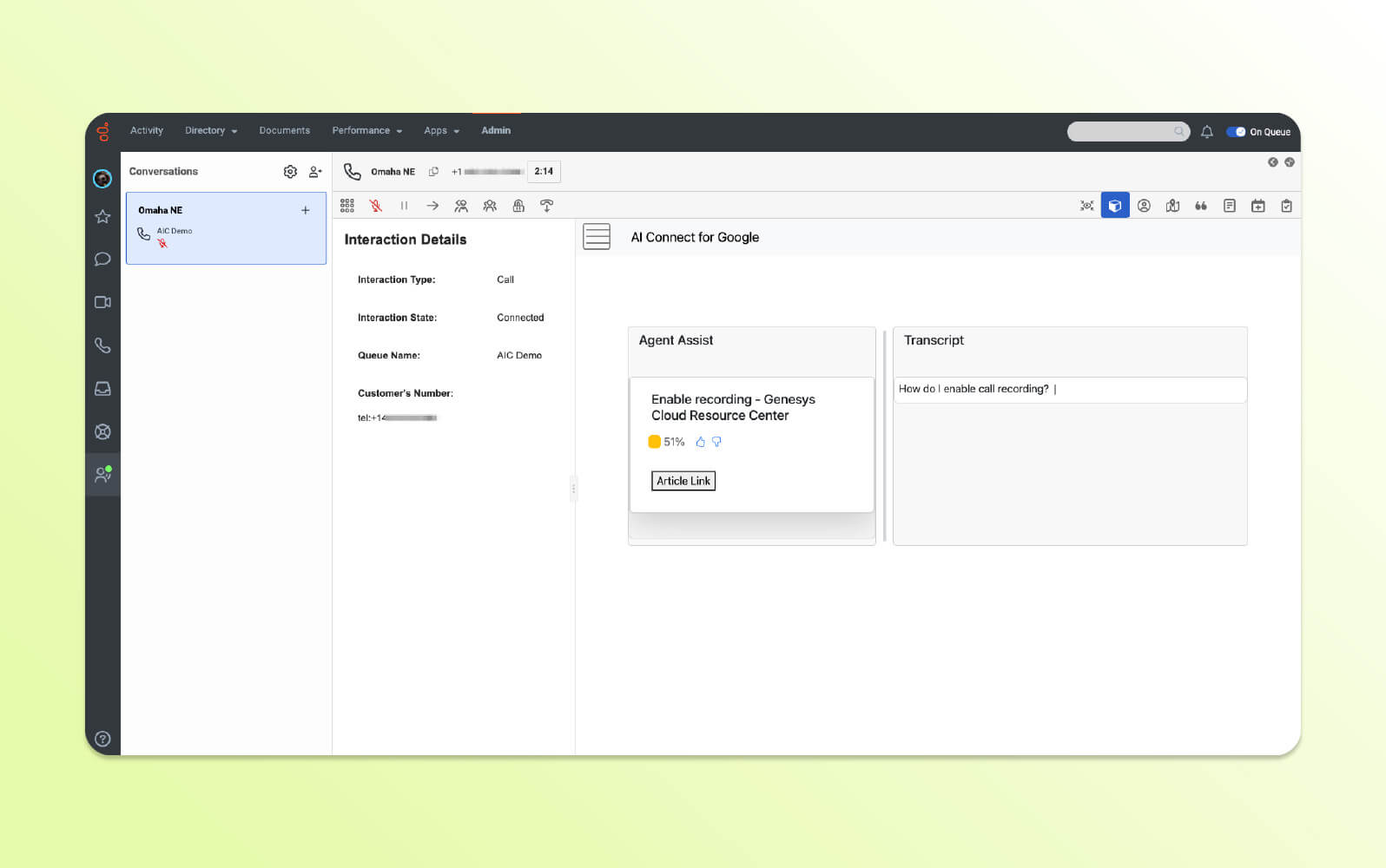
Genesys Cloud CX is an enterprise-grade platform that prioritizes experience orchestration, using AI to standardize customer journeys across all digital and voice touchpoints. Going beyond basic automation, the tool uses web behavior to anticipate customer needs and deliver real-time, proactive assistance or offers. The platform also features predictive routing that replaces static rules with AI models to dynamically match customers with the best-suited agent.
Additionally, there's real-time support that surfaces relevant knowledge articles during live conversations and automatically generates post-interaction summaries. While these tools aim to reduce agent workload and improve first-contact resolution, the system’s depth can lead to operational complexity and a steeper learning curve during initial setup.
|
Pros |
Cons |
|
|
What people are saying:
Learn more: Discover how the Genesys Cloud App integrates with Zendesk and how Zendesk vs. Genesys compare.
11. Boost.ai
Best for advanced performance analytics
Source: Boost.ai
|
Starting price |
Free trial |
Key features |
|
Contact Boost.ai |
14 days |
|
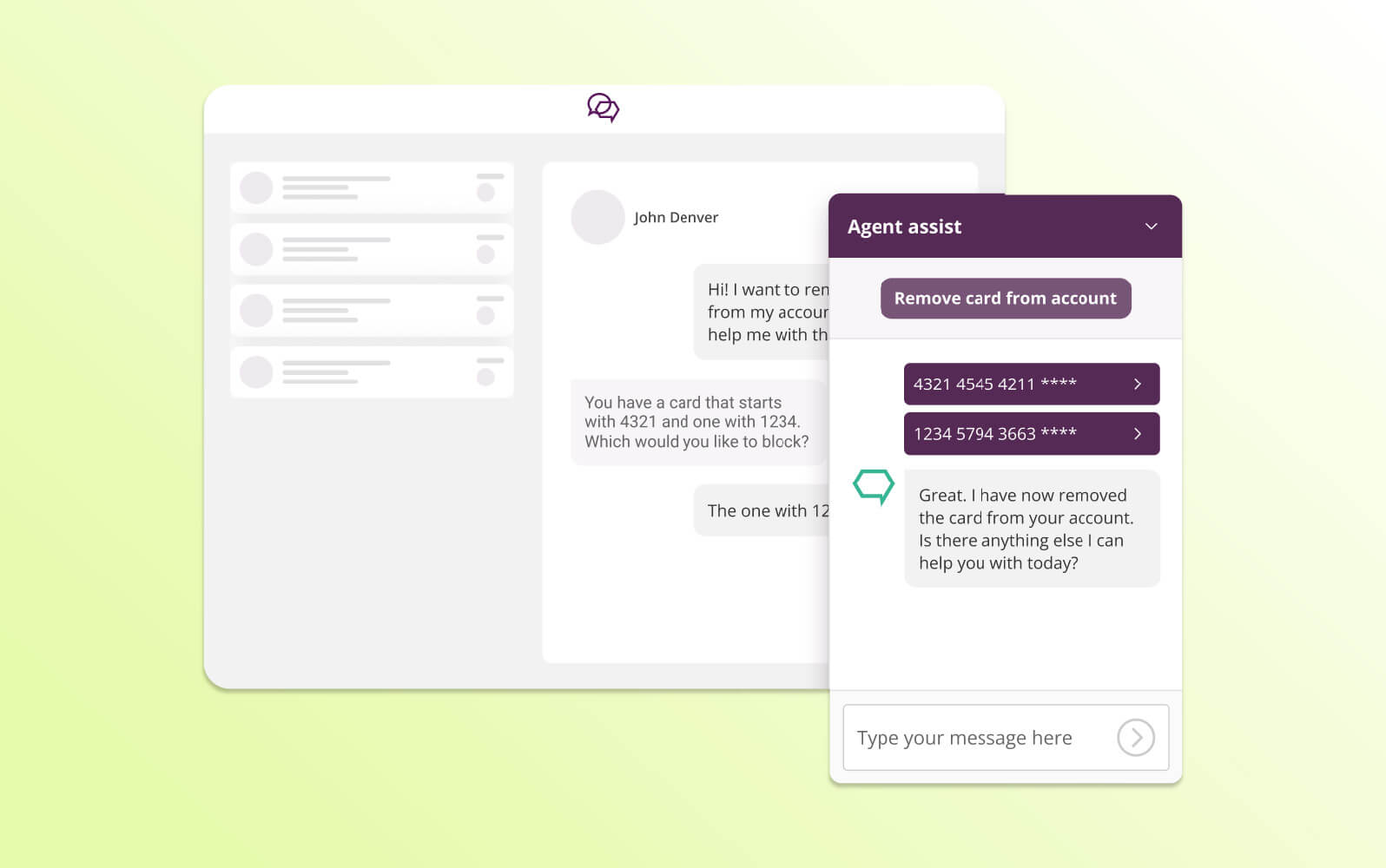
Boost.ai is an enterprise-grade conversational AI platform designed to automate complex, multi-step customer and employee interactions through self-learning virtual agents. Unlike broad service desk solutions, Boost.ai focuses specifically on AI-native automation, frequently integrating with existing platforms like Zendesk to enhance self-service rates without requiring a complete system overhaul. Its virtual agents are able to recognize thousands of intents with high accuracy and maintain context during seamless topic switching.
Through a no-code conversation builder, non-technical teams can rapidly deploy and manage advanced conversational flows. While Boost.ai delivers consistent resolution rates, it’s better suited for large-scale automation projects rather than organizations seeking a basic out-of-the-box AI agents tool.
|
Pros |
Cons |
|
|
What people are saying:
Learn more: See why Phonero chose Zendesk over Boost.ai.
12. Cognigy.ai
Best for multilingual chat automation
Source: Cognigy.ai
|
Starting price |
Free trial |
Key features |
|
Contact Cognigy.ai |
Unavailable |
|
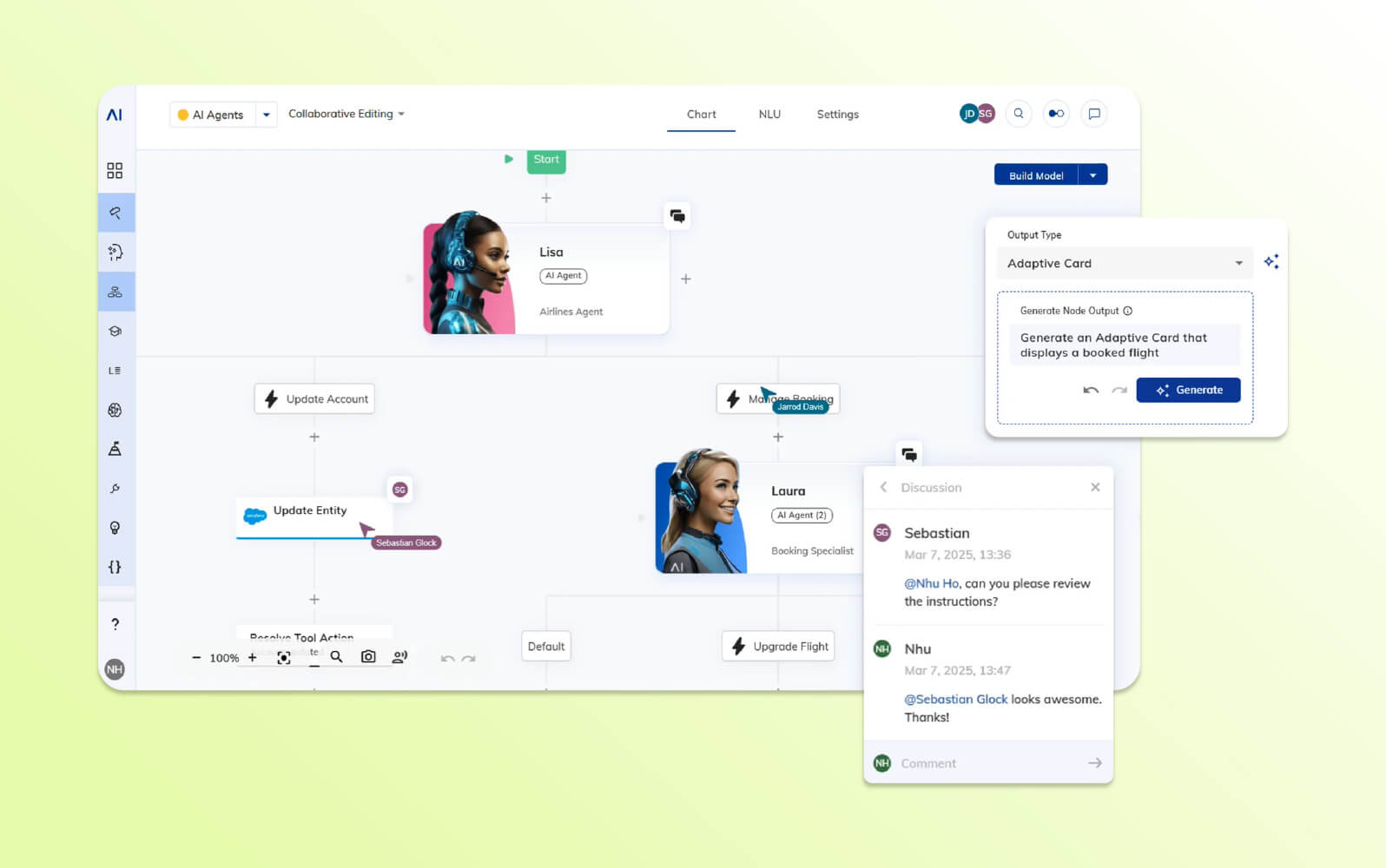
Cognigy.ai is an enterprise-grade Conversational AI platform designed to build highly sophisticated, AI-driven virtual agents. Chatbots and voicebots specialize in complex, high-volume interactions. Unlike Zendesk, which serves as a full-stack customer experience suite with a broad range of agent-facing tools, Cognigy is a specialized automation layer focused on deep AI orchestration. It blends traditional Natural Language Understanding (NLU) with Large Language Models (LLMs) to ensure virtual agents can follow strict business processes while still providing flexible, human-like reasoning.
The tool offers real-time translation, so virtual agents can switch languages instantly across more than 30 channels. Although it has a low-code drag-and-drop builder, its level of configurability is high. This makes Cognigy.ai most suitable for large enterprises with dedicated technical teams.
|
Pros |
Cons |
|
|
What people are saying:
13. Tidio
Best for fast chatbot setup
Source: Tidio
|
Starting price |
Free trial |
Key features |
|
$24.17/mo (billed annually) for 100 billable conversations |
7 days |
|
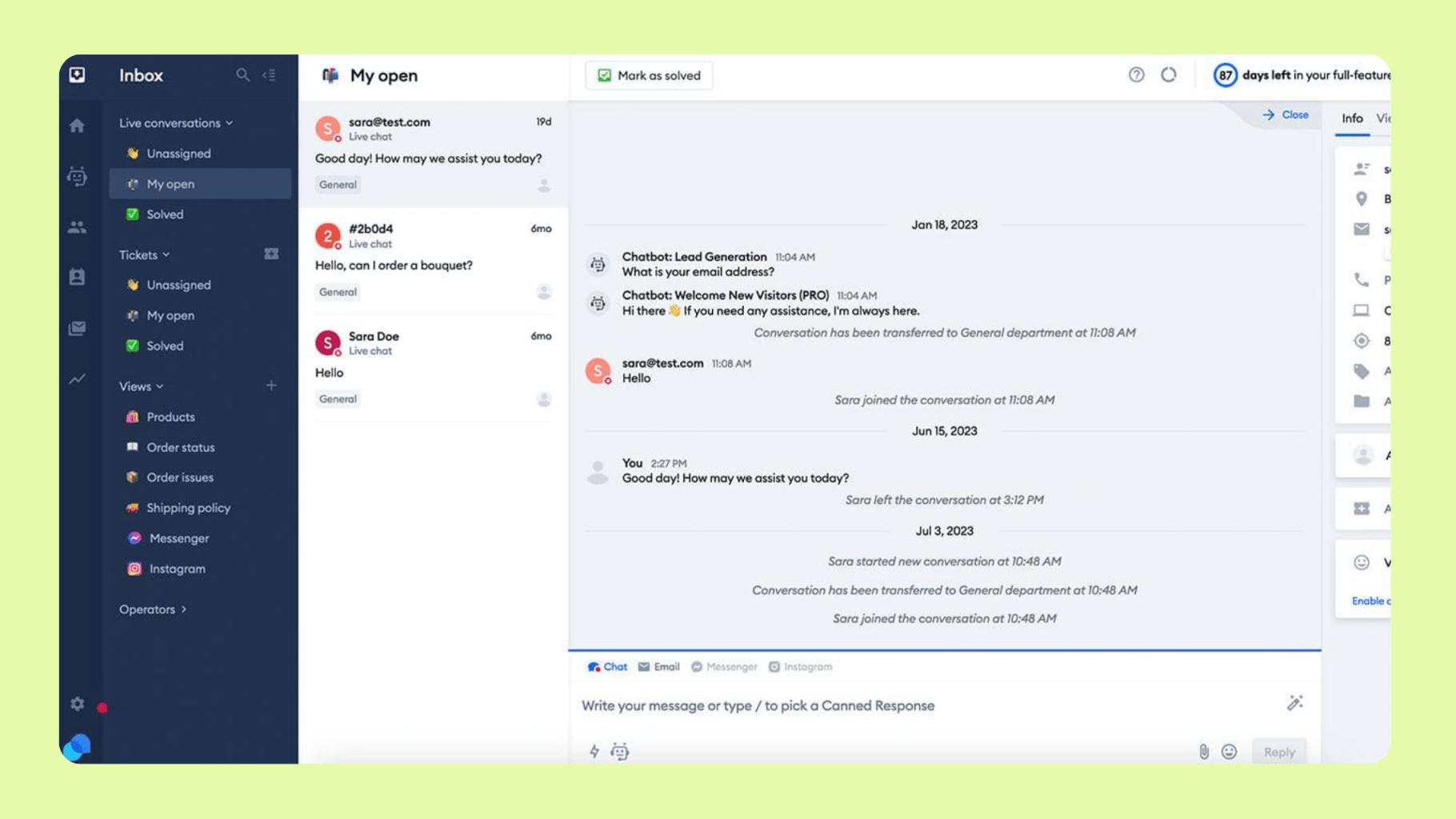
Tidio is a lightweight, affordable conversational AI platform tailored to small and medium-sized businesses looking for rapid deployment. Tidio uses a model that pairs live chat with its Lyro AI Agent. Using natural language processing, the tool resolves up to 70% of routine queries by learning directly from your website.
While celebrated for its intuitive, no-code visual builder, Tidio lacks the deep full-stack infrastructure larger businesses require. It's a good option for teams looking for simple, high-speed automation over complex enterprise-grade solutions.
|
Pros |
Cons |
|
|
What people are saying:
Key features of the best AI agents for customer service
The best AI agents for customer service go far beyond basic automation. They combine conversational intelligence, action, and governance to deliver reliable resolutions at scale.
Here are the essential features to look for:
- Natural language understanding: Accurate understanding of intent, sentiment, and context for more human, relevant responses.
- Seamless integrations: Deep connections with helpdesks like Zendesk, CRMs, and backend systems to take real actions (check order status, process refunds, update accounts).
- Agentic reasoning & automation: Independent complex, multi-step requests resolution without rigid scripts or predefined flows.
- Omnichannel support: Consistent experiences across email, chat, social, mobile, and voice channels.
- Quality assurance & analytics: Built-in QA, interaction scoring, and insights to monitor performance and continuously improve accuracy.
- Security & compliance: Enterprise-grade data protection, privacy controls, and compliance with global standards.
How to choose the right AI agent for your customer service
The right AI agent for your customer service is a solution that automates efficiently while valuing human connections. Here are four essential tips to help you make an informed decision.
1. Define your primary goal
Decide what you need to prioritize. You may want to reduce first-response time, lower cost-per-contact, or increase CSAT. Your priority will shape everything from the channels you launch on to how you measure success.
2. Assess integration capabilities
Map your current stack (helpdesk, CRM, identity, order management, billing, knowledge). Prioritize AI agents with robust, native integrations, especially with your helpdesk, so the agent can access context and take action without creating data silos.
3. Evaluate scalability and language support
Don’t consider today’s volume only. Make sure the solution supports the channels you run now and the ones you plan to add. Plus, consider the languages and regions you’ll expand into without a rebuild.
4. Examine the AI’s intelligence carefully
Go beyond demos and marketing. Try to find out whether the model is purpose-built for CX or a general model repackaged for support. A model trained on billions of real service interactions like Zendesk will typically understand customers more accurately and resolve more issues than a generic customer intelligence platform.
Additionally, discover what data it’s trained on, and how it handles intent and multi-step resolution. Finally, ask vendors if the solution can safely use your knowledge and policies and explain why it answered the way it did.
Main challenges when implementing AI agents for customer service
Successfully deploying AI agents requires more than just picking a tool. It requires a strategic focus on three key operational challenges to ensure long-term ROI and customer trust.
Integration complexity: Avoiding data silos
Standalone AI agents solutions often lack access to critical backend systems, creating data silos. Without a seamless connection to your CRM or help desk software, an AI agent cannot check order statuses or verify loyalty tiers, leading to shallow or even inaccurate interactions. Choose a solution that integrates into your existing infrastructure to provide a unified operational view for both AI and human agents.
Maintaining quality: Solving the ‘black box’ problem
Many leaders fear losing control over AI reasoning, which can lead to hallucinations or off-brand responses. To maintain quality, implement solutions with built-in transparency and oversight. Tools like Zendesk’s Auto-QA score 100% of automated interactions, allowing managers to monitor performance, fine-tune reasoning, and ensure AI meets the same high standards as human agents.
Data security: Protecting customer trust
As AI agents handle increasingly sensitive information, enterprise-grade security is non-negotiable. Leaders should vet vendors for strict compliance (GDPR, HIPAA) and prioritize data minimization, using features like automated redaction and deletion schedules to scrub PII and sensitive payment info.
See how AI can resolve over 80% of your service requests with Zendesk
The future of service is autonomous resolution. Zendesk’s AI agents are purpose-built to go beyond simple scripts and resolve up to 80% of interactions without human intervention.
How are your current operations? Are repetitive tasks holding your team back? Discover how Zendesk can help you scale efficiency while freeing up your human agents to focus on high-value connections.
Candace Marshall
Vice President, Product Marketing, AI and Automation
Candace Marshall is a seasoned product marketing leader with a passion for solving complex problems and driving innovation in fast-paced environments. Her career began in operations and research, but her love for understanding customers and translating insights into impactful strategies led her to product marketing. Currently, Candace leads product marketing for Zendesk AI including AI agents and Copilot, driving growth across AI-powered solutions and the core service offerings. Her team delivers end-to-end product marketing strategies, from market validation and messaging to go-to-market execution and customer adoption. Before joining Zendesk, Candace spent nearly a decade at LinkedIn, where she built and led the product marketing team for the rapidly scaling Marketing Solutions division, overseeing key advertising products in the multi-billion-dollar business.
See Zendesk’s AI agents in action
Try Zendesk AI agents for free today to experience truly human-first service.