
GiveDirectly speeds up disaster response with Zendesk
GiveDirectly delivers emergency cash to disaster survivors within five days, helping families recover before temporary setbacks become long-term crises. With Zendesk, the nonprofit launches support operations in hours, gathers recipient feedback, improves routing with AI, and connects people across multiple channels—strengthening humanitarian response while ensuring recipients receive timely, accessible support.
“Zendesk is not only about efficiency and communication—it's about building a bridge between people.”
Yazmin Baptiste
Technical Program Manager, Emergency Cash - GiveDirectly
"Because we are moving so quickly, we often have to stand up projects in days—Zendesk allows us to set up a customer service desk in a matter of hours.”
Yazmin Baptiste
Technical Program Manager, Emergency Cash - GiveDirectly
Organization founded
2009
Zendesk customer since
2020
Donors
170,000+
Cash distributed
$1B+
-97%
Audit queue
-87%
Business rule
2 Days
Zendesk deployment
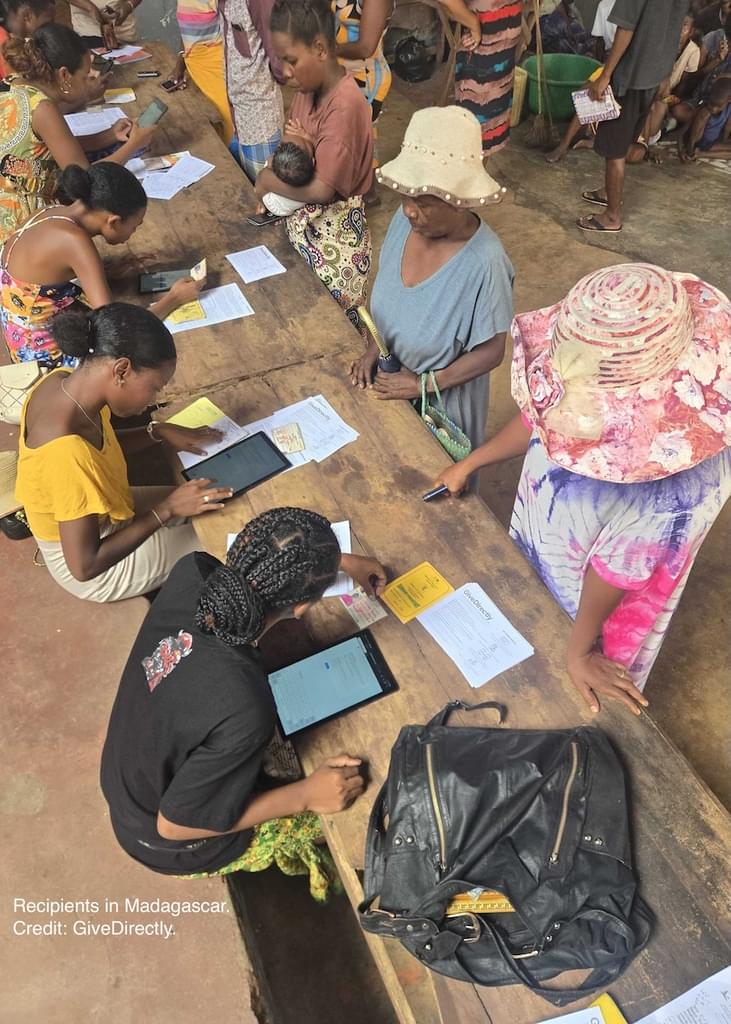
When a hurricane, flood, or wildfire strikes, families don’t just need help—they need it fast. That’s why GiveDirectly delivers emergency cash to people affected by disasters, helping prevent a temporary setback from turning into a long-term crisis.
“We’re trying to solve for speed,” says Yazmin Baptiste, Technical Program Manager, Emergency Cash at GiveDirectly. “Our goal is to be able to send transfers anywhere in the world to anyone who has been impacted by a disaster within five days.”
GiveDirectly has delivered more than $1 billion to more than two million people across Africa and the United States. Before launching a disaster response, however, the organization must demonstrate to local authorities that it can deliver aid responsibly.
“We’re trying to show governments that they can trust us,” Baptiste says. “There is a history of exploitation in the humanitarian aid sector. So of course, a lot of these governments are like, ‘Are you for real? Are you serious about actually helping our community?’”
Zendesk helps GiveDirectly demonstrate that commitment by capturing recipient feedback throughout disaster response efforts. Teams can identify emerging issues before they escalate.
“Zendesk allows us to see patterns,” Baptiste says. “That way, we can adapt our programs to the realities on the ground.”
Smarter routing, faster response
Acting on recipient feedback depends on getting each request to the right team.
“We used keywords like suicide or child abuse to route tickets to our Internal Audit and Safeguarding team,” Baptiste says. “Those keywords can come up in a lot of different contexts, so many tickets had to be manually reassigned.”
Zendesk Intelligent Triage analyzes the context of each conversation, helping GiveDirectly route requests more accurately. The organization reduced the Internal Audit and Safeguarding team’s queue by 97 percent, allowing specialists to focus on cases that truly required their expertise. GiveDirectly also reduced its business rules by 87 percent, making the support operation easier to manage, audit, and explain to frontline teams.
“After we enabled Intelligent Triage, one of our Internal Audit team members said they had never seen their queue this clear,” Baptiste says.
Zendesk Omnichannel Routing also makes ticket assignment easier to understand.
“With skills-based routing, it’s so much more clear why a ticket has gone to an agent,” Baptiste says. “It’s built trust on our team that we actually know what’s going on with the technology.”
Meeting recipients wherever they are
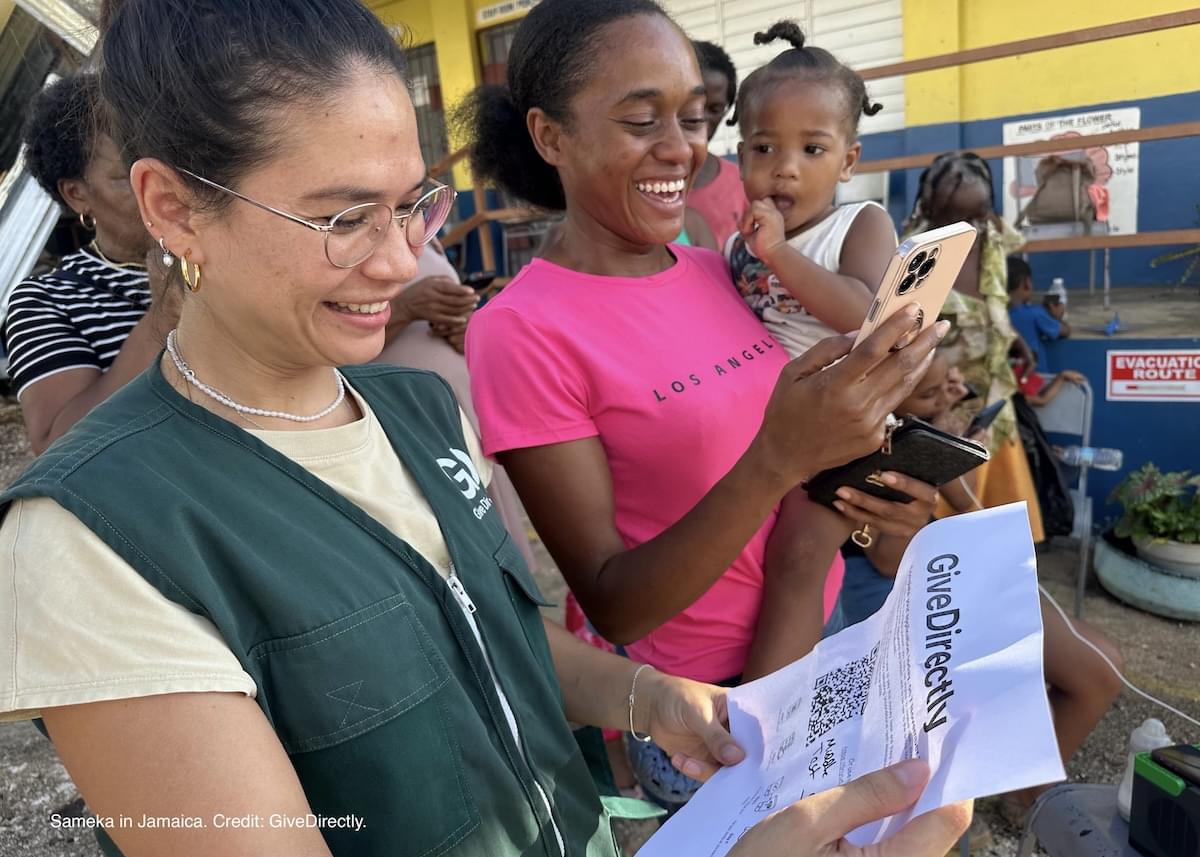
Recovering from a disaster is overwhelming. Many recipients need help navigating enrollment or completing an application.
“Some folks just need that extra support,” Baptiste says. “They might not understand the instructions we’ve given them for verification, so they’ll reach out to an agent to get some clarification.”
Recipients don’t all communicate the same way. Some prefer SMS or email, while others would rather speak with someone directly.
That flexibility proved especially valuable after devastating floods swept through central Texas in 2025.
“My team member first tried to email folks, but not a lot of people were responding,” Baptiste says. “And because we’re able to use so many different channels with Zendesk, he transitioned to voice. And that’s when he started to see more responses.”
Switching to voice helped GiveDirectly reach recipients who otherwise might never have responded. For many families, GiveDirectly’s cash transfer was the first assistance they received after the disaster, helping replace food lost during power outages and purchase school supplies.
“Zendesk is not only about efficiency and communication,” Baptiste says. “It’s about building a bridge between people.”
Building emergency response in hours—not weeks
When disaster strikes, GiveDirectly often has just days to launch a new response. And every project needs a reliable way for recipients to ask questions, complete enrollment, and report problems.
“Because we are moving so quickly, we often have to stand up projects in days,” Baptiste says. “Zendesk allows us to set up a customer service desk in a matter of hours.”
That need became especially clear during the COVID-19 pandemic, when GiveDirectly launched Project 100, raising $100 million for 100,000 recipients in just 100 days.
“During that project, we were using Gmail to field inquiries—and you can only imagine what happened,” Baptiste says. “For one, how do you keep track of who is responding to whom?”
After joining Zendesk’s Tech for Good program, GiveDirectly replaced its shared Gmail inbox with Zendesk, creating a centralized support operation across email, voice, SMS, and other channels. The migration gave GiveDirectly a scalable platform that now allows support operations for new disaster responses to launch in a matter of hours.
“Shifting from Gmail to Zendesk was such a powerful tool to ensure recipients got the support they needed,” Baptiste says. “And they set it up in two days—I don’t know how they did that!”
A stronger foundation through Tech for Good
As GiveDirectly’s use of Zendesk expanded, years of incremental changes left the platform fragmented. Working alongside the Zendesk Volunteer Program, the organization redesigned its service operation around a scalable architecture that laid the foundation for Intelligent Triage, Omnichannel Routing, and other Zendesk capabilities it relies on today.
“The volunteer program has been invaluable,” Baptiste says. “We had someone who listened to the issues and pain points that we were having and built this beautiful infrastructure that we still use today.”
Looking ahead
GiveDirectly wants every recipient—regardless of language, location, or digital literacy—to reach support through the channel that’s most comfortable for them. The organization is exploring expanded voice capabilities, including IVR and AI agents that could answer routine questions while allowing human specialists to focus on more sensitive cases.
“If you want to build something quickly, Zendesk is a great platform to do that,” Baptiste says. “It allows us to meet people wherever they’re at—whether that’s Facebook Messenger, voice, or SMS—and that communication and connection is so important for our work.”